The Everyday Horsekeeper
Daily Checks, Feeding Basics and Care Records
Proposed £16.99 · 80 pages planned
View guide
Home / The Guides / Understanding Your Horse
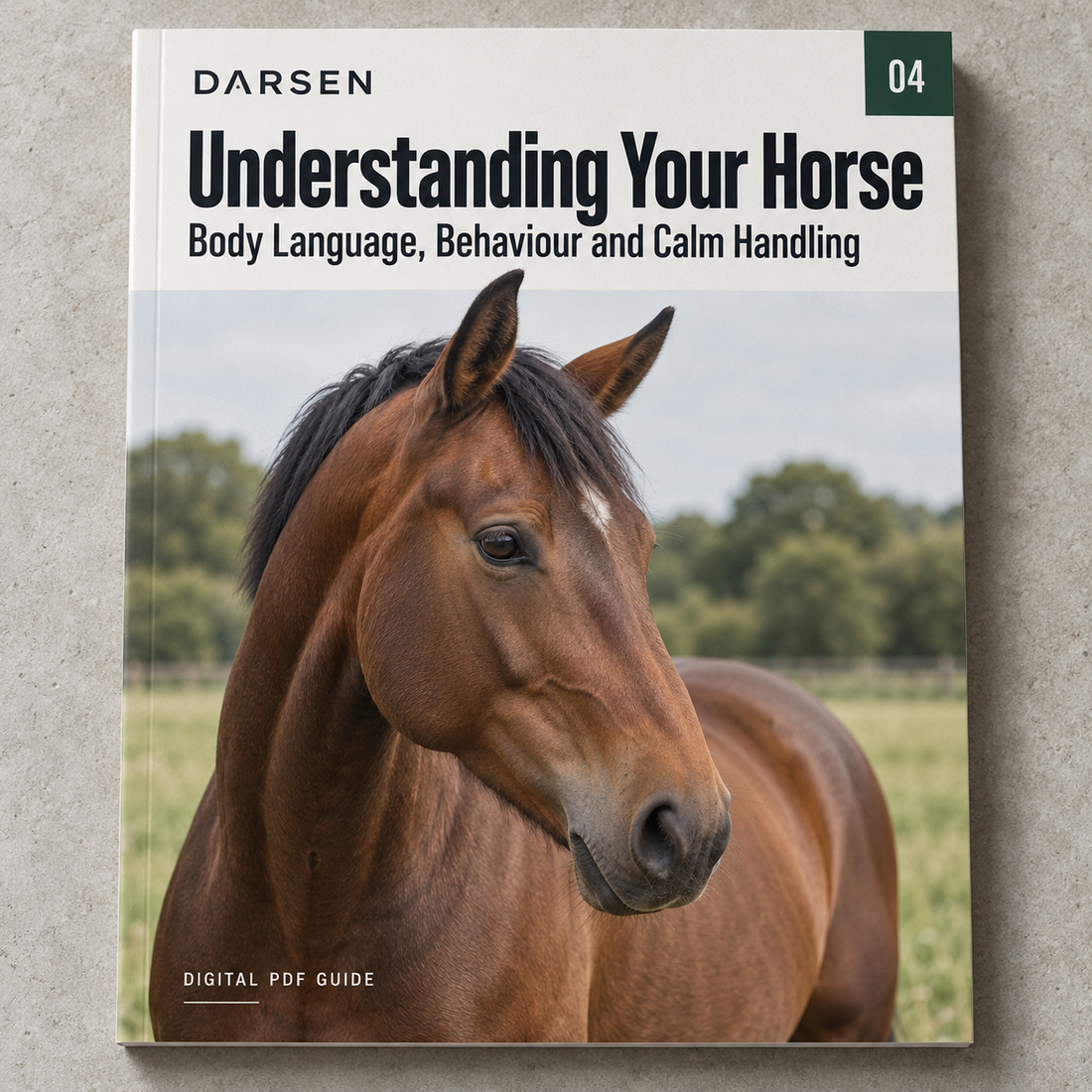
Body Language, Behaviour and Calm Handling
Learn to observe body language in context, recognise the importance of daily welfare needs and approach handling with patience and practical supervision.
In development — not yet available to purchase
Understanding a horse starts with observation, not a label. A change in posture, expression or willingness to take part can have several explanations, and the surrounding situation matters.
Understanding Your Horse introduces a careful way to look at behaviour: watch the whole horse, consider comfort and context, and notice what has changed. Explore companionship, everyday opportunities for movement and foraging, and the value of consistent, considerate interactions.
The handling chapters focus on preparation, boundaries and knowing when to pause, alongside instruction from a competent person. This is not a promise to fix a difficult horse or a replacement for veterinary assessment when pain or illness may be involved.
Beginners and everyday carers who want to observe horses more thoughtfully and build their practical knowledge.
It does not diagnose illness, prescribe a ration or a turnout plan, or replace a demonstration from a competent person. Practical tasks such as leading, tying and lifting feet need in-person instruction and safe equipment.
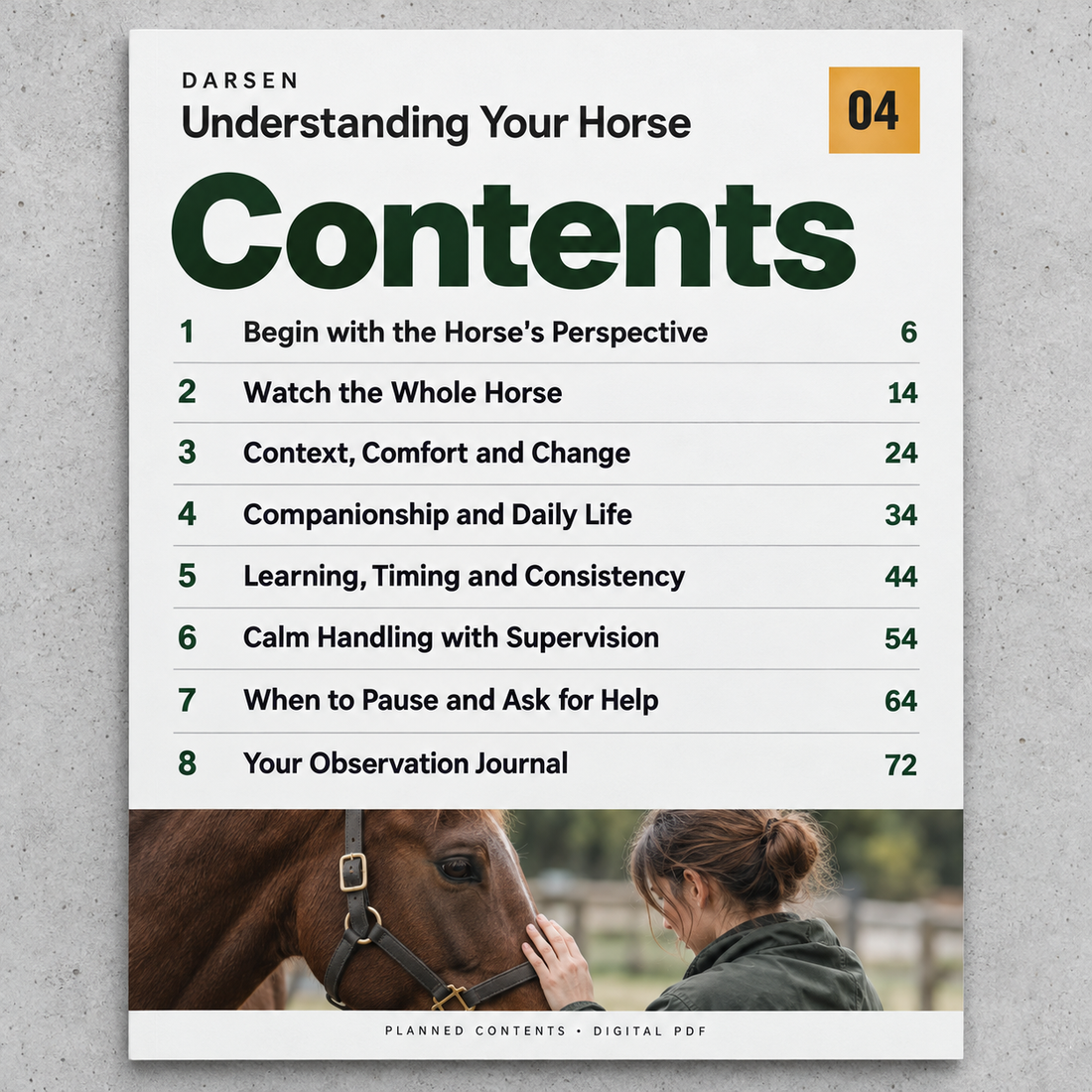
Planned contents. Pagination may change during production.
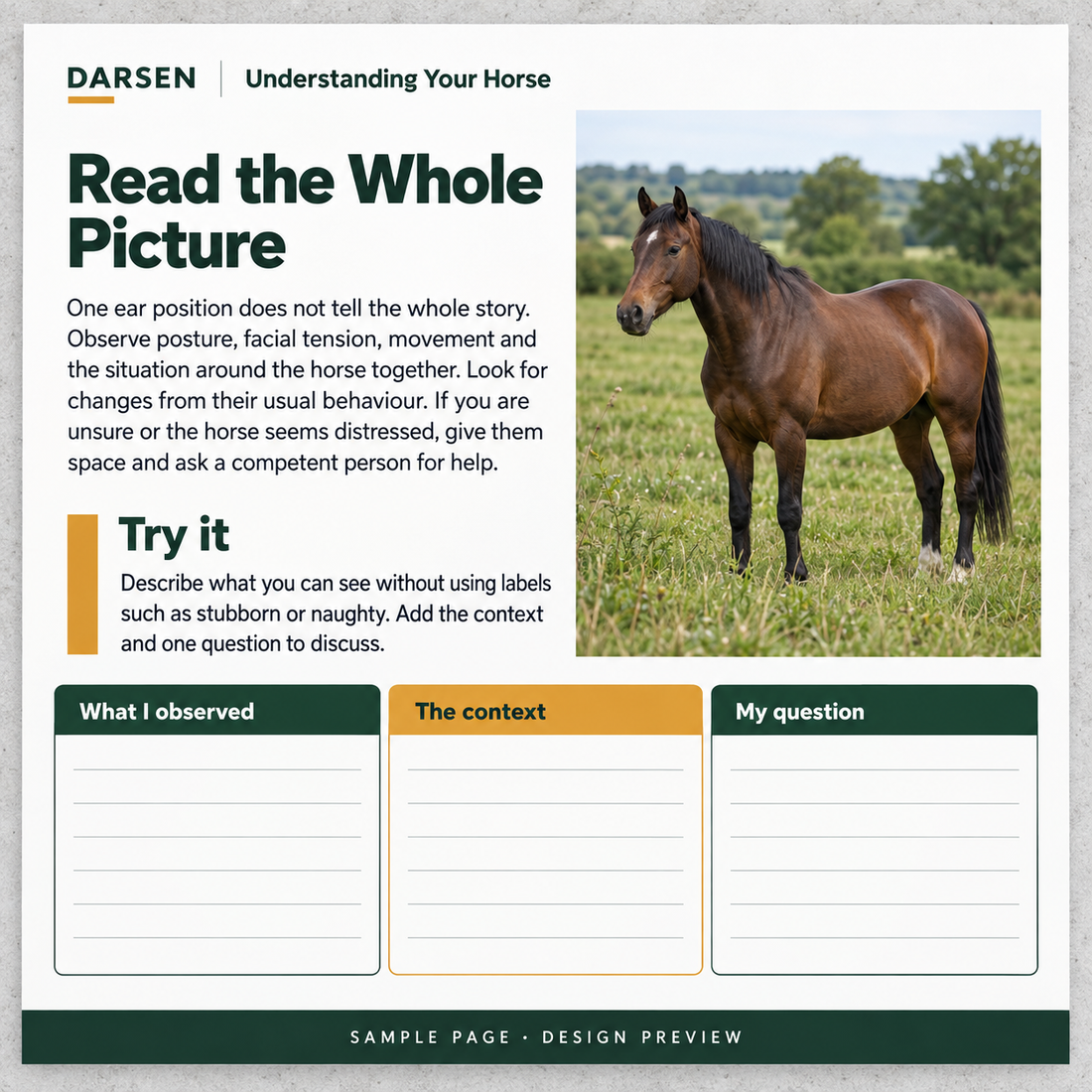
One ear position does not tell the whole story. Observe posture, facial tension, movement and the situation around the horse together. Look for changes from their usual behaviour. If you are unsure or the horse seems distressed, give them space and ask a competent person for help.
Describe what you can see without using labels such as stubborn or naughty. Add the context and one question to discuss.
Sample page design. Complete manuscript in development.
The guides are in development. This page shows planned contents and sample designs. Complete PDF books are not yet available.
No. The planned product is a digital PDF guide. The book mockup illustrates the cover design; no physical book is included.
No. Horse handling and practical care skills need suitable in-person instruction. Use the guide as a companion to supervised learning.
No. It provides general educational information. If you suspect pain, illness or a concerning change, contact your veterinarian or responsible care professional.
The current targets are 80, 84, 88 and 76 pages for the four guides. These are planned lengths and may change during writing and layout.
The proposed price is £16.99 per guide or £49.99 for the four-guide collection. The individual total is £67.96, making the collection £17.97 less.
Daily Checks, Feeding Basics and Care Records
Proposed £16.99 · 80 pages planned
View guide
Coat, Mane, Tail and Everyday Comfort
Proposed £16.99 · 84 pages planned
View guideBedding, Turnout and a Well-Kept Yard
Proposed £16.99 · 88 pages planned
View guideAll four planned guides in one digital set: daily care, grooming, the yard and behaviour. 328 pages planned across four books.
£49.99Proposed · £67.96 separately · Save £17.97

The planned products are digital PDF guides. Book-shaped images illustrate the cover designs; no physical books, equipment or printed material are included. Prices and page counts are proposed and may change during writing and layout.
General educational information. Not a substitute for veterinary advice or supervised practical instruction. Horse handling and practical care skills need suitable in-person instruction from a competent person, and young readers need adult supervision. Care varies with the individual horse: nothing here prescribes a ration, turnout plan, bedding system or routine for every horse, and no guide diagnoses illness. If you suspect pain, illness or a concerning change, contact your vet or the responsible professional promptly. A completed checklist is not proof that a horse is healthy, and no part of this collection has been reviewed by a qualified equine professional yet.
Everyday care. A better understanding.